Softness, and peace, and joy, and love, and bliss,
Exalted manna, gladness of the best,
Heaven in ordinary, man well drest,
The milky way, the bird of Paradise,
Church-bells beyond the stars heard, the soul’s blood,
The land of spices; something understood.
—from “Prayer,” by George Herbert (d. 1633)
Though bells are present in Catholic liturgy throughout the annual cycle of feasts and fasts, they have a special relationship to the Resurrection: it is only during the days immediately preceding Easter that altar bells are formally prohibited. The stark, jarring sound of their replacement—a wooden clapper known as a crotalus—is an unforgettable feature of the Roman rite’s Triduum ceremonies. It evokes the dismal, dissonant state of a world that has chosen Barabbas over the divine Musician, and it ensures that the return of sweet-sounding bells on Holy Saturday will herald the sweetness of the Feast of Feasts.
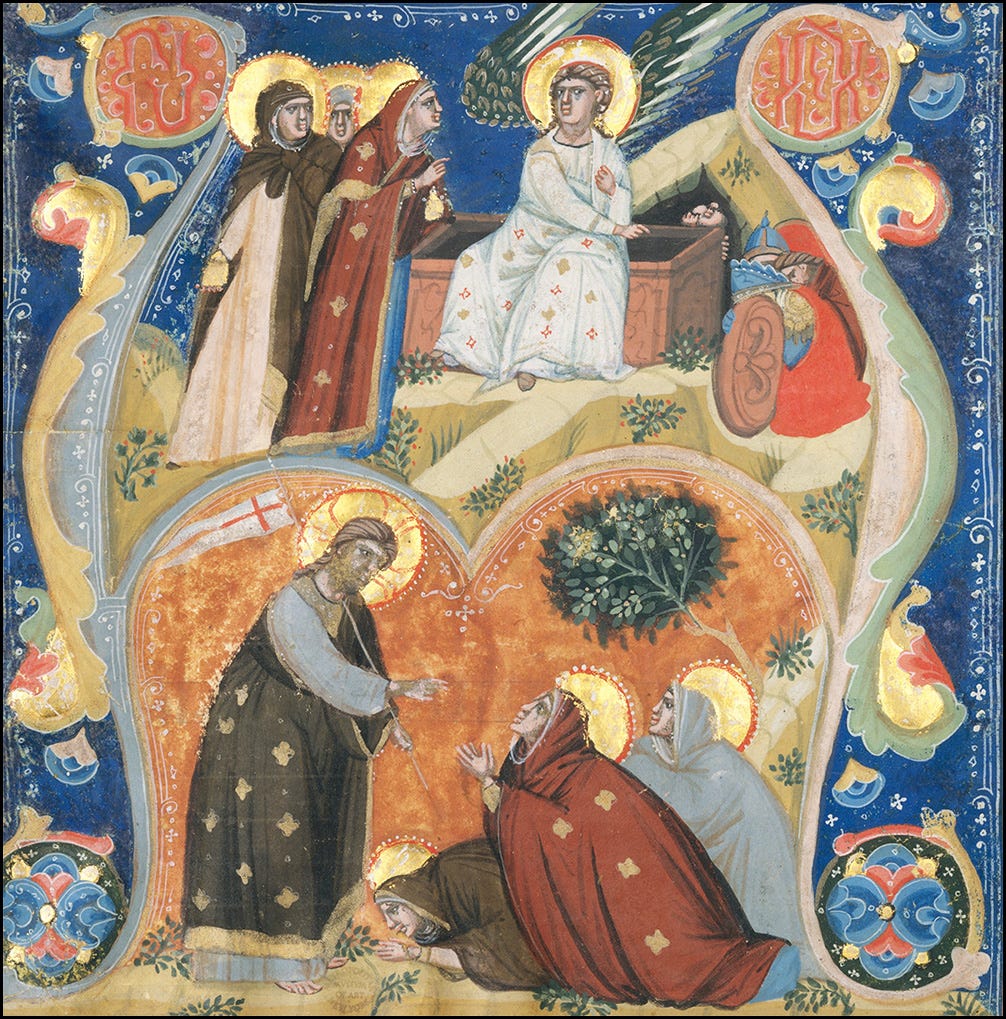
All four Gospels portray the announcement of the Resurrection as central to its occurrence: “go quickly, and tell his disciples, that he is risen from the dead” (Matthew 28:7); “he goeth before you into Galilee: there shall ye see him, as he said unto you” (Mark 16:7); “they ... returned from the tomb, and told all these things to the eleven, and to all the rest” (Luke 24:8–9); “Mary Magdalene cometh and telleth the disciples, I have seen the Lord” (John 20:18). There is a sense that the Resurrection is so joyous and wondrous and momentous that it cannot be merely believed or experienced or contemplated: it must be proclaimed.